Avanti Derma and the Birth of Nonsurgical Phalloplasty
Avanti Derma and the Birth of Nonsurgical Phalloplasty
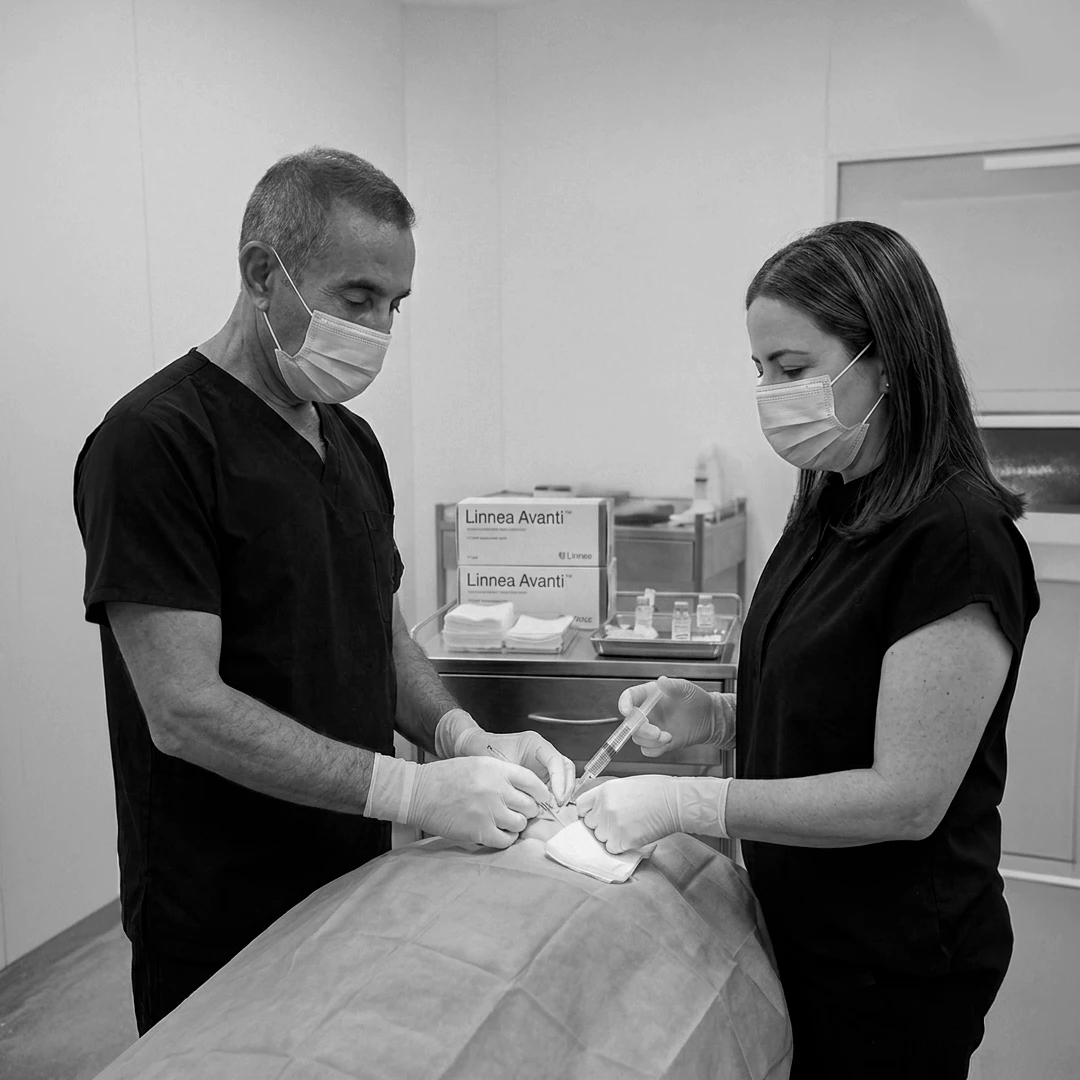
Avanti Derma and the Birth of Nonsurgical Phalloplasty: A 15-Year Retrospective
Dr. Luis Casavantes | Avanti Derma (Tijuana, Mexico).
Where It Began
In 2007, a dermatology practice in Tijuana, Mexico, quietly began doing something no one else in the world was doing in a systematic, documented, and clinically rigorous way: injecting polymethylmethacrylate (PMMA) microspheres into the penile shaft to enhance girth — permanently, safely, and without a single surgical incision.
That practice was Avanti Derma. The procedure would eventually be called nonsurgical phalloplasty
Avanti Derma's nonsurgical phalloplasty is a minimally invasive outpatient procedure developed in 2007 by Dr. Luis Casavantes and Dr. Palmira Morales, enhancing penile girth through the use of injectable dermal fillers customized to meet each patient's specific goals. What began as a carefully reasoned clinical hypothesis — that PMMA, already proven safe for facial volumization, could be adapted for subdermal penile augmentation — grew over the following decade and a half into a body of evidence, a published clinical dataset, a textbook, and a global patient base drawn from across North America and beyond.
This is the story of how that happened, and what it means for the field today.
The Problem That Needed Solving
Before Avanti Derma's protocol existed, the options for men seeking penile girth enhancement were either primitive or dangerous. The history of penile augmentation by injection includes industrial silicone, liquid paraffin, and other unregulated foreign substances — with the most common outcomes being cosmetic dissatisfaction, pain, swelling, and lymphedema. Surgery was ultimately required in over 91% of cases presenting with complications from such foreign substance injections.
Surgical alternatives — fat grafting, dermal fat grafts, biological membrane implants — carried their own burdens: hospitalization, general anesthesia, unpredictable reabsorption rates, extended recovery, visible scarring, and high rates of revision. Many of these surgical methods are now considered outdated due to their prolonged downtime and significant risk of complications, including permanent scarring or deformities.
The field desperately needed a safe, reproducible, minimally invasive alternative backed by a material with a known safety track record. PMMA, which had been used in facial augmentation since 1989 and in intraocular lenses, pacemaker components, and bone cement for decades, fit that profile — provided the injection technique, depth, volume, and post-procedure protocol were developed and refined with rigor.
That is precisely what Dr. Casavantes set out to do.
Building the Evidence: 729 Patients, 1,500 Sessions
The clinical work that followed the first procedures in 2007 was methodical. Over eight years, the senior author performed penile augmentation in 752 men in a practice setting, generating one of the largest single-center datasets in the history of the procedure. The data of 729 patients and 203 completed questionnaires were evaluated statistically. The overall satisfaction rate was 8.7 on a scale of 1 to 10. After one to three injection sessions, average girth increased by 3.5 cm — a 134% improvement from a baseline of 10.2 cm to 13.7 cm. Penile length also increased from an average of 9.8 to 10.5 cm due to the weight and stretching force of the implant. Complications occurred in 0.4% of cases, when PMMA nodules required surgical removal — exclusively in uncircumcised patients.
Those results were published in the Journal of Sexual Medicine in 2016 — the first peerreviewed report of its kind, and the paper that placed nonsurgical phalloplasty on the map of evidence-based medicine.¹ Parts of the study data had been presented internationally years earlier, at the World Consensus on Bioplasty in Guadalajara in 2008, 2010, 2011, and 2013 — conferences at which Dr. Casavantes and Dr. Morales shared their evolving protocol with the global medical community before the formal publication existed.
Why PMMA? The Biology Behind the Results
The choice of PMMA was not arbitrary. PMMA microspheres are too large to be phagocytized by macrophages, which means rather than being degraded, they become encapsulated in a thick fibrous capsule. It is this fibrous capsule around the PMMA microspheres that is responsible for the long-term tissue augmentation and the prevention of microsphere clustering. The result is a biologically integrated, structurally stable augmentation that does not reabsorb — because the body, in effect, builds around it rather than breaking it down.
PMMA is a safe biocompatible material used in intraocular lenses, pacemaker shields, and bone cement. Foreign body granulomas occur in approximately 1 in 2,000 patients, primarily after intradermal injections. No granulomas have been reported in tens of thousands of patients after subdermal and epifascial injections — the approach used for penile augmentation.
The injection plane matters enormously. Avanti Derma's protocol deposits PMMA in the subdermal space above Buck's fascia — far deeper than the dermal layer where granuloma risk is documented. Technique, not material, is the variable most responsible for adverse outcomes in PMMA augmentation.
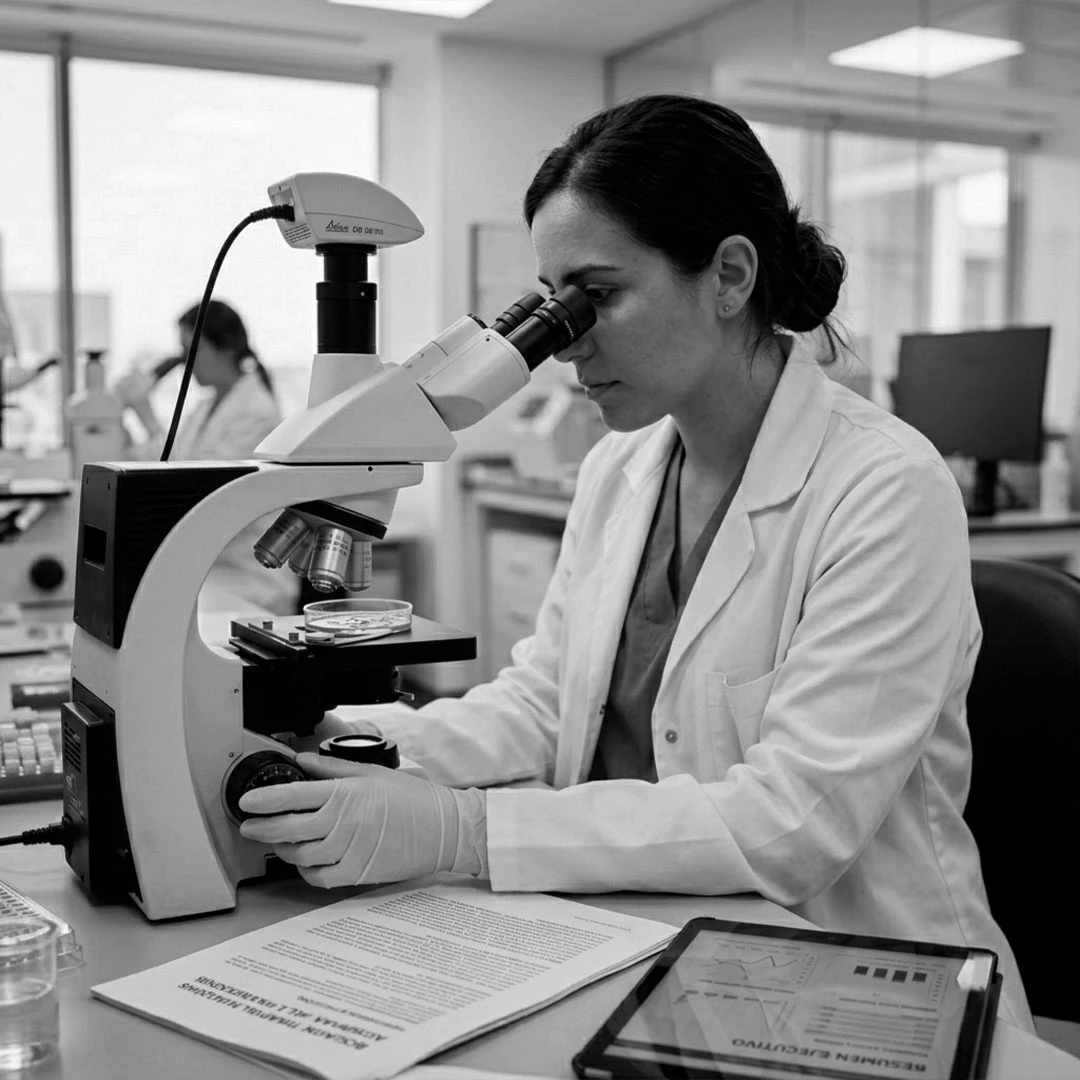
From Metacrill to Linnea Avanti™: Refining the Material
The earliest procedures at Avanti Derma used Metacrill, a Brazilian suspension of PMMA microspheres in carboxymethylcellulose carrier. Over time, as the protocol matured and the team's understanding of ideal viscosity, microsphere concentration, and carrier behavior deepened, the practice developed and adopted Linnea Avanti™ — a formulation specifically tailored to the anatomical and biomechanical demands of penile augmentation.
Avanti Derma is the only practice that offers the three most sought-after soft tissue filler options: permanent (Linnea Avanti™), long-lasting (Ellansé™), and temporary (Voluma™ or other brands of hyaluronic acid). This range reflects a clinical philosophy that patient goals are not uniform — and that a practice claiming to offer personalized care must have the tools to back that claim.
Formalizing the Knowledge: Girth Matters — The Book
In 2019, Dr. Casavantes authored Girth Matters: A Comprehensive Guide to Nonsurgical Male Enhancement — the first book of its kind, guiding readers through the history, methodologies, and risk-benefit analysis of penile size enhancement.² The book formalized fifteen years of accumulated clinical knowledge into a resource accessible to both patients and practitioners, and established Avanti Derma's intellectual contribution to the field beyond the walls of the
That a practicing dermatologist in Tijuana produced the foundational peer-reviewed paper and the defining patient-facing textbook on nonsurgical phalloplasty — before major academic urology centers had even begun investigating the procedure — speaks to what genuine pioneering looks like.
Where the Field Stands Now
The landscape Dr. Casavantes and Dr. Morales helped create in 2007 looks very different in 2025. What was once a niche procedure performed at a single center in Tijuana is now recognized as a shift toward wider use of injectable girth enhancement globally. Peer-reviewed studies from South Korea, Taiwan, Brazil, and Europe have confirmed the safety and efficacy of injectable fillers for penile augmentation with HA, polylactic acid, and PMMA alike.³ The American Urological Association has published position statements on cosmetic penile enhancement procedures. The conversation has moved from "is this possible?" to "how do we do it best?"
Dr. Luis Casavantes and Dr. Palmira Morales are recognized as global pioneers in nonsurgical phalloplasty, a technique increasingly replacing traditional surgical methods due to its effectiveness and convenience.
The practice continues to see patients from across the United States and internationally, located minutes from the US–Mexico border in Tijuana's business district — accessible, experienced, and still at the frontier of what this field is becoming, including the integration of PRP and regenerative adjuncts into the post-procedural protocol.
A Note on What Comes Next
The next chapter in nonsurgical phalloplasty is regenerative. PRP — platelet-rich plasma — is being studied as a tissue-healing and collagen-optimizing adjunct to filler procedures. Stem cellderived therapies are entering clinical trials for erectile function. Ultrasound guidance is refining injection precision. The foundation that Avanti Derma built through careful, documented clinical work over fifteen years is the platform from which that next chapter will be written.
The field did not begin at a major academic center. It began in a clinic in Tijuana, in 2007, with a dermatologist who decided to solve a problem that surgery had never quite solved — and who was rigorous enough to write it all down.
Bibliography
Casavantes, Luis, Gottfried Lemperle, and Palmira Morales. "Penile Girth Enhancement with Polymethylmethacrylate-Based Soft Tissue Fillers." Journal of Sexual Medicine 13, no. 9 (2016): 1414–1422. https://doi.org/10.1016/j.jsxm.2016.07.003.
Casavantes, Luis. Girth Matters: A Comprehensive Guide to Nonsurgical Male Enhancement. Avanti Derma, 2022. ISBN 978-1-7374986-0-5.
Ahn, S. T., J. S. Shim, W. J. Bae, S. W. Kim, J. J. Kim, and D. G. Moon. "Efficacy and Safety of Penile Girth Enhancement Using Hyaluronic Acid Filler and the Clinical Impact on Ejaculation: A Multicenter, Patient/Evaluator-Blinded, Randomized Active-Controlled Trial." World Journal of Men's Health 40, no. 2 (2022): 299–307. https://doi.org/10.5534/ wjmh.210012.
Casavantes, Luis, Gottfried Lemperle, and Palmira Morales. "Response and Rebuttal to Editorial Comment Regarding 'Penile Girth Enhancement with PMMA-Based Soft Tissue Fillers.'" Journal of Sexual Medicine 13, no. 9 (2016): 1424. https://doi.org/10.1016/ j.jsxm.2016.07.012.
Lemperle, Gottfried. "Background/Basic Science of Polymethylmethacrylate Fillers." Rejuvenation Resource, March 9, 2021. https://www.rejuvenationresource.com/articles/ background-science/background-basic-science-of-polymethylmethacrylat
Pang, K. H., et al. "Complications and Outcomes Following Injection of Foreign Material into the Male External Genitalia for Augmentation: A Single-Centre Experience and Systematic Review." International Journal of Impotence Research (2023). https://doi.org/ 10.1038/s41443-023-00675-8.
Gold, Michael H. "Optimizing Outcomes with Polymethylmethacrylate Fillers." Journal of Cosmetic Dermatology 17, no. 3 (2018): 298–304. https://doi.org/10.1
Avanti Derma. "Safe and Effective Nonsurgical Phalloplasty Procedures." Accessed May 2025. https://avantiderma.com/phalloplasty.