Nonsurgical Penile Girth Enhancement: Separating Fact from Fiction
Dr. Casavantes | Avanti Derma
Few topics in aesthetic medicine carry as much misinformation as penile girth enhancement. The internet is saturated with unregulated products, dubious testimonials, and outright myths — while the men who genuinely seek safe, evidence-based options often struggle to find straight answers. This article addresses the most common misconceptions and explains what the clinical evidence actually supports.
Who Seeks This Procedure — and Why
The desire for penile enhancement is far more common than most men realize — and more psychologically complex than it is often portrayed.
Penile size dissatisfaction affects between 42% and 55% of men depending on the population and culture studied. Yet the clinical reality is that most men seeking penile girth augmentation have physiologically normal penises but may suffer from severe preoccupation with penis size, known as small penis syndrome, part of the penile dysmorphophobic disorder.
Men who seek girth augmentation consistently perceive their actual penis size as significantly smaller than their ideal — and they show higher penile dysmorphic disorder symptoms, lower self-esteem, and lower body image–related quality of life compared to non-clinical norms. This phenomenon can be partially explained by the increased interest in pornography in recent years and the altered perception of what constitutes a normal penile size
This is why a responsible consultation must evaluate both the physical and the psychological dimensions of a patient's request before any procedure is discussed. Enhancement is a valid option — but it is not a substitute for addressing underlying body image concerns.
Fiction #1: Pills, Pumps, and Stretching Devices Work
They do not. Most men seeking help visit internet sites that promote non-evidence-based lotions, pills, exercises, or penile extenders. None of these approaches have demonstrated meaningful, lasting results in peer-reviewed clinical trials. They may delay a patient from seeking legitimate care and, in some cases, cause harm.
Fiction #2: Any Injectable Will Do
This is one of the most dangerous misconceptions in this field. The history of penile augmentation includes a long list of materials — industrial silicone, liquid paraffin, mineral oil, and other substances — injected by unqualified practitioners with devastating results. In a systematic review of men presenting with complications from foreign substance injection into
the genitalia, the most common injected substances were silicone and liquid paraffin. Surgery was required in over 91% of cases.
Fact: HA Fillers Are Safe and Effective — with Limitations
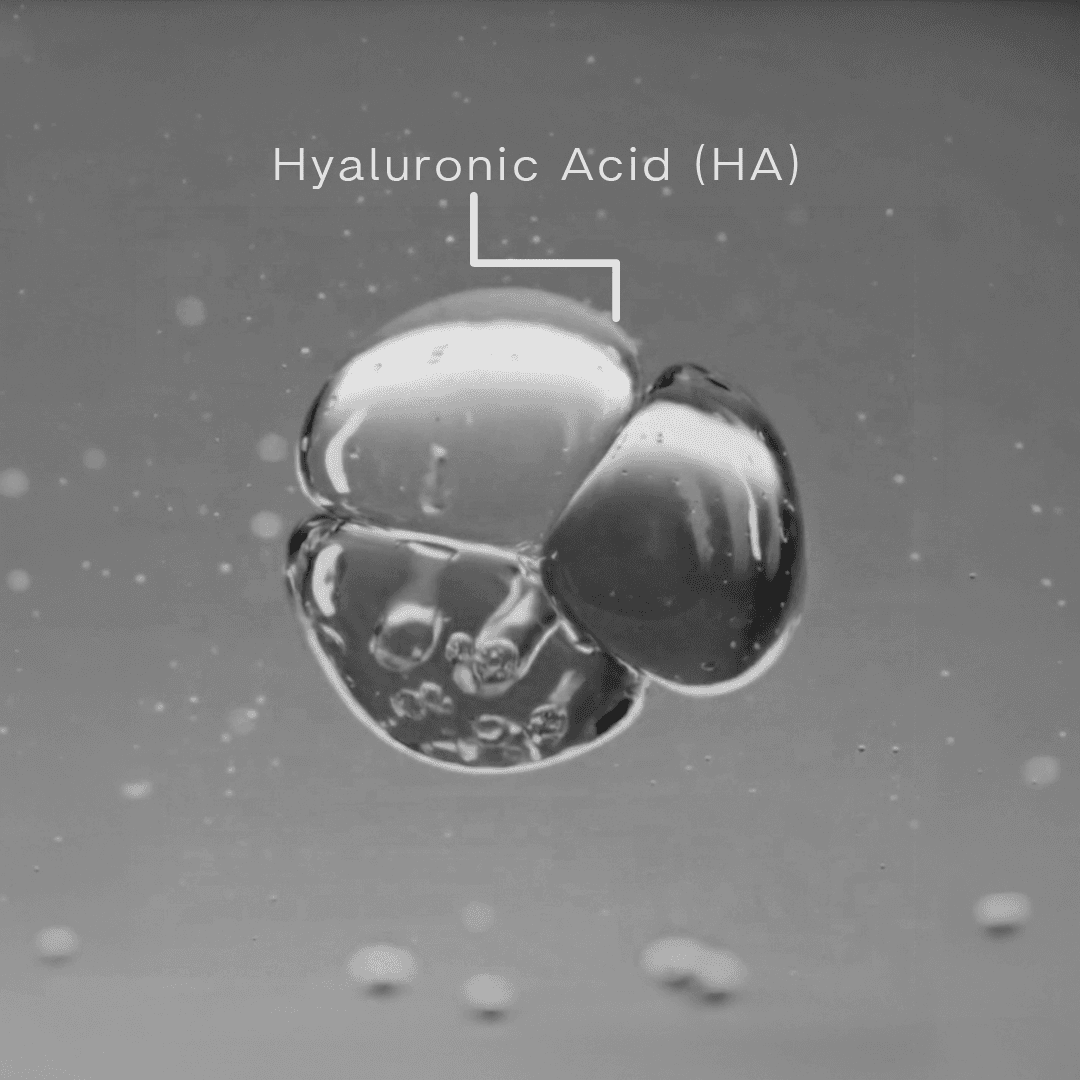
Hyaluronic acid is the most studied injectable for penile girth enhancement. Clinical trials have demonstrated that penile girth enhancement with HA and polylactic acid fillers results in significant enhancement without serious adverse events. HA is reversible, adjustable, and welltolerated — making it an appropriate choice for patients who want to explore enhancement without a permanent commitment.
Its limitation is durability. HA is gradually reabsorbed by the body, and maintenance sessions are required to sustain results over time.
Fact: PMMA Offers Permanent, Clinically Validated Results
This product sits on the other side of the spectrum, for patients seeking a lasting outcome, PMMA has the strongest long-term evidence base. In a study of 729 patients over an eight-year period, PMMA microsphere injections produced an average girth increase of 3.5 cm — a 134% improvement — with an overall patient satisfaction rate of 8.7 out of 10. The complication rate was 0.4%.
PMMA is a biocompatible material used in intraocular lenses, pacemaker shields, and bone cement. Foreign body granulomas occur in approximately 1 in 2,000 patients, primarily after intradermal injections — an approach not used for penile augmentation, where the injection plane is always subdermal or epifascial.
Because PMMA is permanent and cannot be dissolved, patient selection, anatomical assessment, and injection technique are critical. It is not the right choice for every patient — but for properly selected candidates, the outcomes are durable and well-supported by data.
PCL, CaHA, and PLA are less commonly selected fillers that occupy the middle ground between Hyaluronic Acid (HA) and PMMA in terms of longevity, collagen stimulation, and permanence.
Fact: The Injector Matters as Much as the Material
No filler, however well-studied, delivers safe and consistent results in inexperienced hands. The anatomy of the penile shaft — its fascial layers, vascular supply, and lymphatic drainage — requires precise placement at the correct depth. Migration, nodule formation, and asymmetry are largely technical complications, not inherent material failures.
Patients should seek practitioners with documented experience in this specific procedure, peerreviewed publications, and the clinical infrastructure to manage any complications that may arise.
A Note on Psychological Screening
At our practice, every consultation for penile enhancement includes a psychological component. Treating penile size dissatisfaction may necessitate psychological support rather than — or in addition to — medical intervention. Patients whose distress appears disproportionate to their actual anatomy, or who show signs of body dysmorphic disorder, are referred for psychological evaluation before any procedure is considered. Enhancement should improve quality of life — not substitute for addressing its root causes.
Clinical Takeaways
Penile size dissatisfaction is common and often disconnected from actual anatomical measurements.
Non-medical products and unregulated injectables carry no proven benefit and serious potential for harm.
HA fillers offer a reversible, well-tolerated option; PMMA offers permanent, evidencebacked results; PCL, PLA, and CaHA — each appropriate for different patient profiles.
Injector experience, proper patient selection, and psychological screening are as important as material choice.
A thorough consultation is the essential first step before any enhancement procedure.
Bibliography
Casavantes, Luis, Gottfried Lemperle, and Palmira Morales. "Penile Girth Enhancement with Polymethylmethacrylate-Based Soft Tissue Fillers." Journal of Sexual Medicine 13, no. 9 (2016): 1414–1422. https://doi.org/10.1016/j.jsxm.2016.07.003.
Casavantes, Luis, Gottfried Lemperle, and Palmira Morales. "Response and Rebuttal to Editorial Comment Regarding 'Penile Girth Enhancement with PMMA-Based Soft Tissue Fillers.'" Journal of Sexual Medicine 13, no. 9 (2016): 1424. https://doi.org/10.1016/ j.jsxm.2016.07.012.
Casavantes, Luis. Girth Matters: A Comprehensive Guide to Nonsurgical Male Enhancement. Avanti Derma, 2022. ISBN 978-1-7374986-0-5.
Ahn, S. T., J. S. Shim, W. J. Bae, S. W. Kim, J. J. Kim, and D. G. Moon. "Efficacy and Safety of Penile Girth Enhancement Using Hyaluronic Acid Filler and the Clinical Impact on Ejaculation: A Multicenter, Patient/Evaluator-Blinded, Randomized Active-Controlled Trial." World Journal of Men's Health 40, no. 2 (2022): 299–307. https://doi.org/10.5534/ wjmh.210012.
Dewitte, Marieke. "Penile Size Dissatisfaction: (Going Beyond) the Role of the Mental Health Professional." Journal of Sexual Medicine 21, no. 10 (2024): 839–841. https:// doi.org/10.1093/jsxmed/qdae085.
Sharp, G., A. N. Fernando, M. Kyron, J. Oates, and P. McEvoy. "Motivations and Psychological Characteristics of Men Seeking Penile Girth Augmentation." Aesthetic Surgery Journal 42, no. 11 (2022): 1305–1315. https://doi.org/10.1093/asj/sjac112.
Pang, K. H., et al. "Complications and Outcomes Following Injection of Foreign Material into the Male External Genitalia for Augmentation: A Single-Centre Experience and Systematic Review." International Journal of Impotence Research (2023). https://doi.org/ 10.1038/s41443-023-00675-8.
European Association of Urology. "Penile Size Abnormalities and Dysmorphophobia." In EAU Guidelines on Sexual and Reproductive Health, 2023. https://uroweb.org/guidelines/ sexual-and-reproductive-health/chapter/penile-size-abnormalities-and-dysmorphophobia.