Nonsurgical Phalloplasty
A minimally invasive outpatient approach to penile augmentation using soft-tissue fillers — how it works, who it's for, and what to expect from a properly conducted procedure.
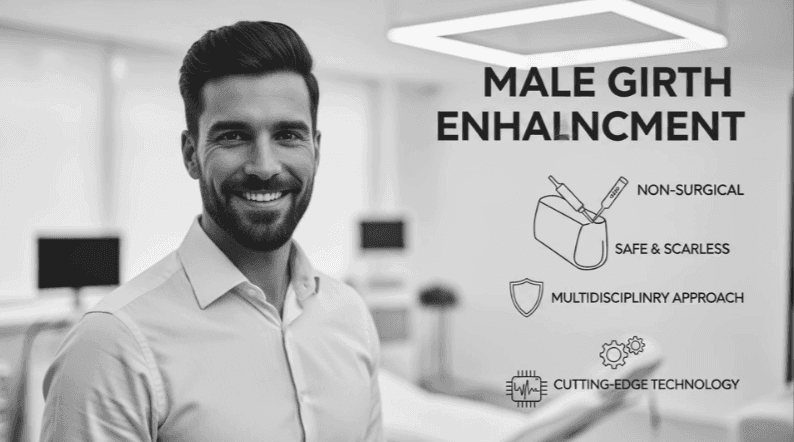
Nonsurgical Phalloplasty
Dr. Luis Casavantes | Dr. Palmira Morales
Avanti Derma, Tijuana, Mexico
Nonsurgical phalloplasty is a minimally invasive outpatient procedure that uses customized soft-tissue fillers, delivered under local anesthesia, to safely and precisely enhance penile girth — without surgery, general anesthesia, or visible scarring. In experienced hands and in appropriately selected patients it is a predictable, staged, and reversible or long-lasting intervention depending on the material chosen.
This article is a plain-language overview of what nonsurgical phalloplasty is, how it is performed at Avanti Derma, which materials are used, and what a patient should reasonably expect.
How the Procedure Works
A nonsurgical girth enhancement session lasts approximately 45–90 minutes. It is performed in an outpatient clinical setting. Local anesthesia — typically a dorsal penile block — is used; no general anesthesia and no sedation are required. Filler is delivered through a fine cannula into the subcutaneous plane of the penile shaft, distributed evenly along the circumference and length, following the specific anatomy of the patient.
The patient walks out of the clinic the same day. Normal daily activity resumes within 24–48 hours. Sexual activity is generally restricted for approximately two weeks to allow tissue integration.
The Materials We Use
Avanti Derma is one of the only clinics in the world that offers all three classes of soft-tissue filler for penile girth enhancement. This is deliberate: material selection is a clinical decision that follows from the individual patient, not a marketing choice made by the clinic. Our full comparison of HA, PMMA and Ellansé explains the trade-offs in detail.
Voluma™ (hyaluronic acid, HA). A hydrophilic cross-linked gel that adds volume by attracting water. Lasts approximately 9–14 months in penile tissue. Fully reversible with hyaluronidase. Best suited to patients trying the procedure for the first time or who want to preserve the option to change course.
Ellansé™ M (polycaprolactone, PCL). A biostimulatory filler. The 40-μm PCL microspheres provide initial volume and then stimulate the patient's own collagen as the microspheres slowly degrade over 12–36 months. Not reversible in the enzymatic sense, but resorbable.
Linnea Safe™ (PMMA). Non-degradable polymethylmethacrylate microspheres (30–50 μm) that form a permanent scaffold, encapsulated by the patient's own collagen. Result is designed to be lifelong. Not reversible. Reserved for patients who have already decided on permanence — often after a prior experience with HA — and who meet strict selection criteria.
Who Is a Candidate
A candidate for nonsurgical phalloplasty is generally:
An adult in good general health.
Free of active autoimmune conditions, active infections, or uncontrolled systemic disease.
Not on active blood-thinning medications at the time of procedure.
Free of prior aesthetic implants or fillers of unknown origin in the same anatomy. Patients who have had a Penuma implant explanted can often be evaluated 6–12 months after removal.
Psychologically stable, with realistic expectations, and screened for body-dysmorphic patterns that a filler cannot resolve.
At Avanti Derma every consultation includes a medical history review, an anatomical assessment, a discussion of material options, and — when indicated — a psychological screening using validated instruments (COPS-P). A patient who does not meet criteria on any of these fronts is not a patient we accept for treatment.
Realistic Outcomes
A single session typically produces a mid-shaft circumference increase of 2.5–3.5 cm, measured after edema has resolved (approximately two weeks). Multi-session protocols allow larger increases delivered in stages — safer than attempting maximal augmentation in a single visit. Our article on realistic before-and-after results explains what those numbers actually look like in practice.
The result stabilizes between three and six months. Final tactile and visual outcomes should be assessed at the six-month follow-up, not at day three or day seven.
What patients most commonly report at follow-up is not visual size but tactile presence: heavier, fuller, more anatomically present. This is the dimension of the outcome that photographs cannot capture and that many patients did not fully anticipate.
What Nonsurgical Phalloplasty Does Not Do
It does not lengthen the penis. Length augmentation is a distinct procedure with different mechanics and a substantially different risk profile.
It does not treat erectile dysfunction. Regenerative therapies — PRP, shockwave and stem cells — address ED separately.
It does not correct Peyronie's disease or penile curvature. Those require phase-specific treatment protocols outside the scope of girth enhancement.
It does not guarantee a specific outcome. Every anatomy is different; every result is a range.
Recovery
Day 0: Immediate volume visible. Local anesthesia wears off within hours.
Days 1–3: Mild swelling and tenderness. Patient can walk, work, and travel.
Week 1: Most edema resolved. Result approaching true baseline.
Weeks 2–4: Return to sexual activity, per provider guidance.
Month 3–6: Final result stabilizes.
What a Good Provider Looks Like
The single most consequential decision in this field is provider selection. Complications cluster around provider selection and patient selection — not around a specific material. Our detailed guide on how to choose a phalloplasty doctor covers credential verification, red flags, and the specific questions to ask before you book anywhere.
A responsible provider:
Conducts a full consultation before offering any treatment.
Explains multiple material options and the reasoning for each.
Performs a physical assessment before recommending technique or volume.
Discusses complications specifically and honestly.
Presents psychological screening as standard, not optional.
Has documented experience and, ideally, published work in the specific procedure.
A provider who offers same-day treatment on the first visit, pressures you to decide immediately, or presents one material as the only option is not conducting a consultation. That is a sales protocol.
Clinical Takeaways
Nonsurgical phalloplasty is a minimally invasive outpatient procedure for penile girth augmentation using soft-tissue fillers.
Three material classes exist: HA (temporary, reversible), Ellansé (long-term, biostimulatory), PMMA (permanent).
Material selection is a clinical decision, not a preference.
Realistic single-session girth increase is 2.5–3.5 cm; final result stabilizes at 3–6 months.
Provider selection is the single most consequential decision in this field.
Bibliography
Casavantes, L., Lemperle, G., Morales, P. "Penile Girth Enhancement with Polymethylmethacrylate-Based Soft Tissue Fillers." J Sex Med 13, no. 9 (2016): 1414–1422.
Casavantes, L. Girth Matters: A Comprehensive Guide to Nonsurgical Male Enhancement. Avanti Derma, 2022.
Manfredi, C., Romero Otero, J., Djinovic, R. "Penile Enhancement: A Comprehensive and Current Perspective." Current Urology (2024). PMC12076428.
Oates, J., Sharp, G. "Men's Experiences and Psychological Outcomes of Nonsurgical Medical Penile Girth Augmentation." PMC (2023). PMC9896141.
Pang, K.H., et al. "Complications and Outcomes Following Injection of Foreign Material into the Male External Genitalia." Int J Impot Res (2023).